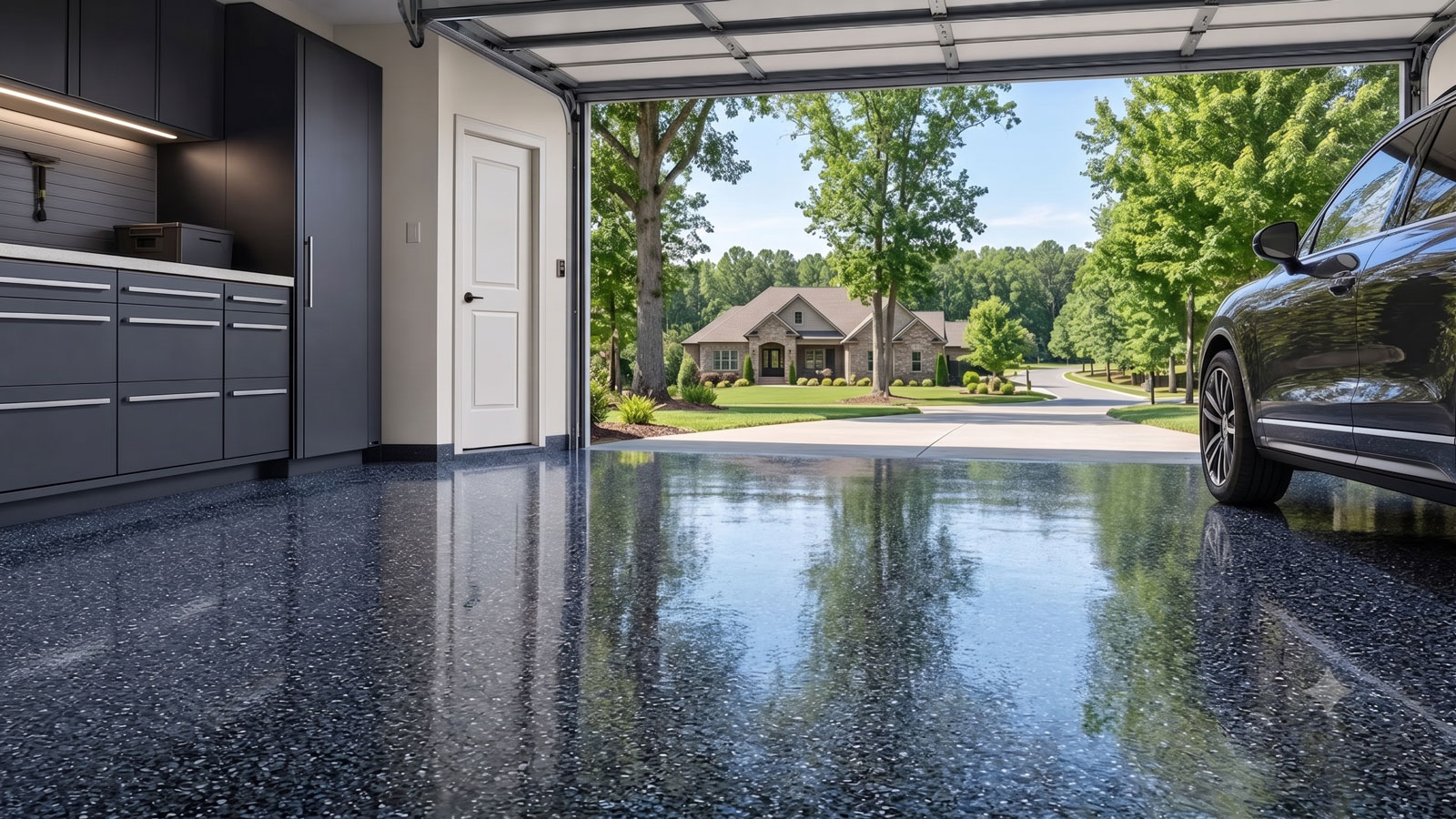
Garage Floor Coating in Clifton Park, NY
Floor Coating Services in Clifton Park, NY
Clifton Park's garage market is dominated by suburban growth rather than a dense historic core. The Northway and later residential expansion produced large neighborhoods of attached two- and three-car garages, while older areas such as Vischer Ferry and Jonesville retain a different mix of properties and slab histories.
The Mohawk River forms the town's southern edge, and low areas near Vischer Ferry contrast with higher inland subdivisions. Public drainage and subdivision systems manage runoff broadly, but the practical garage questions remain driveway pitch, downspouts, threshold ponding, and whether dampness persists after surrounding concrete dries.
Many Clifton Park floors are relatively modern, yet that does not make them coating-ready. Curing compounds, sealers, dense machine finishes, builder patches, and control joints can all interfere with adhesion, while established floors can add road salt, DIY coatings, or repair history. Clifton Park's larger family garages also tend to contain more detail than a simple open rectangle. Three-car bays, steps, stem walls, storage alcoves, freezers, and built-in cabinets can add edge grinding and staging even when the slab is structurally sound. A complete quote should identify those details separately from builder-product removal and drainage.
Local Market Insight
Capital Region garages deal with winter road salt, melting snow, moisture, and repeated freeze-thaw cycles. Thorough concrete preparation and a coating system suited to those conditions are important for reliable adhesion and easier cleanup.
What Affects the Cost of Garage Floor Coating in Clifton Park?
Clifton Park projects often center on builder-treatment removal, multi-bay geometry, storage, control joints, winter residue, and return-to-service timing rather than decades of old urban coatings.
Older areas and later garage alterations can still add paint, repairs, or mixed pours, while Mohawk River and subdivision drainage should be evaluated separately from surface preparation.
- Newer suburban concrete: Relatively young slabs can still contain curing compounds, sealers, dense finishes, and builder residue that require mechanical profiling before coating.
- Two- and three-car layouts: Larger attached garages add joints, perimeter, steps, stem walls, and storage edges beyond the open slab area. Check the actual property condition rather than assuming the whole neighborhood behaves the same way.
- Mohawk River and local drainage: River context is useful, but actual driveway runoff, threshold water, dampness, and previous coating failure should control water-related recommendations. Mechanical preparation should reach sound concrete rather than simply roughen the visible surface.
- Winter salt and snowmelt: Capital Region vehicles carry salt, slush, and grit indoors, making routine cleaning and practical traction important finish considerations. The repair plan should distinguish stable defects from joints or movement that need different treatment.
- Older-area repairs: Vischer Ferry, Jonesville, and established neighborhoods can include later additions, repaired cracks, or older surface treatments that need separate evaluation.
- Household staging: Family-entry use, cabinets, freezers, sports gear, and multiple vehicles can make storage movement and cure-time planning part of the project scope.
Call for a clear, project-specific estimate — or request one online.
Clifton Park's Suburban Growth and Young Garage Slabs
Clifton Park's modern residential character means many garage floors come from successive suburban development waves rather than from a dense nineteenth-century city fabric. That makes younger attached concrete common across much of the town.
Young concrete still presents preparation questions. Curing compounds, topical sealers, smooth machine finishes, control joints, and builder patches can all affect adhesion even when the slab looks nearly perfect before work begins.
Homeowners should expect the estimate to explain how the surface will be opened, what will happen at joints and repairs, and how edges around steps, stem walls, or storage systems will be handled.
The Northway-era suburban pattern also means many Clifton Park garages are primary household entry points, not just parking spaces. That affects project sequencing because storage, bikes, sports gear, and multiple vehicles need somewhere to go during grinding and cure time. Those logistics can be planned without shortening the mechanical preparation. The estimate should make clear which labor comes from slab preparation and which comes from moving, masking, perimeter detail, or return-to-service needs.
Mohawk River Context and Lot-Level Runoff
The Mohawk River and the low Vischer Ferry area make drainage a real local topic, but most coating decisions should still be made at the individual property rather than from a townwide flood assumption.
Watch the driveway during rain or thaw, note whether roof discharge reaches the apron, and look for threshold entry, mineral residue, or damp slab edges. Those observations tell more about the garage than simply knowing it lies within the Mohawk watershed.
A coating can improve cleanup from snowy vehicles and road salt, but it cannot redirect exterior runoff. Drainage correction and concrete preparation should remain separate scope items.
Vischer Ferry and the Mohawk River provide a strong local reason to ask about water, but the useful evidence still comes from the property. A modern subdivision can have a dry slab yet a poorly pitched apron, while an older river-area garage can remain completely dry. Watching rain or thaw at the door line helps separate normal winter wetness from recurring exterior entry. That distinction should be resolved before coating rather than hidden beneath a moisture-oriented sales recommendation.
Frequently Asked Questions
Why can a newer Clifton Park garage still need heavy preparation?
Curing compounds, sealers, dense finishes, and builder repairs can interfere with adhesion. A clean-looking young slab still needs proper mechanical profiling. during the on-site evaluation. during the property review.
Does Mohawk River proximity automatically mean moisture treatment?
No. River proximity is drainage context. Actual threshold water, persistent dampness, mineral deposits, and prior coating failure are the evidence that matters. during the on-site evaluation. during the property review.
What adds scope in a three-car Clifton Park garage?
Extra bays add joints, perimeter, steps, stem walls, storage edges, and staging beyond the open floor square footage. during the on-site evaluation. during the property review.
How should winter salt affect the finish?
Choose practical traction and easy cleanup, then maintain the floor by removing salty meltwater and grit routinely during winter. during the on-site evaluation. during the property review.
Can an older Clifton Park neighborhood have a newer slab?
Yes. Garages can be added, expanded, or repoured later. Joint lines, texture changes, and patch history can reveal a newer concrete generation. during the on-site evaluation. during the property review.
Clifton Park Neighborhoods & Local Context
Phone Quote Line
Speak with a local floor coating specialist about your project and get a realistic estimate range.
(518) 808-2767Typical Project Cost
$3,000 – $5,500
Typical range for a standard two-car garage. Final pricing depends on floor size, concrete condition, prep work, coating type, and finish options.
Helpful Guides
Other Service Areas