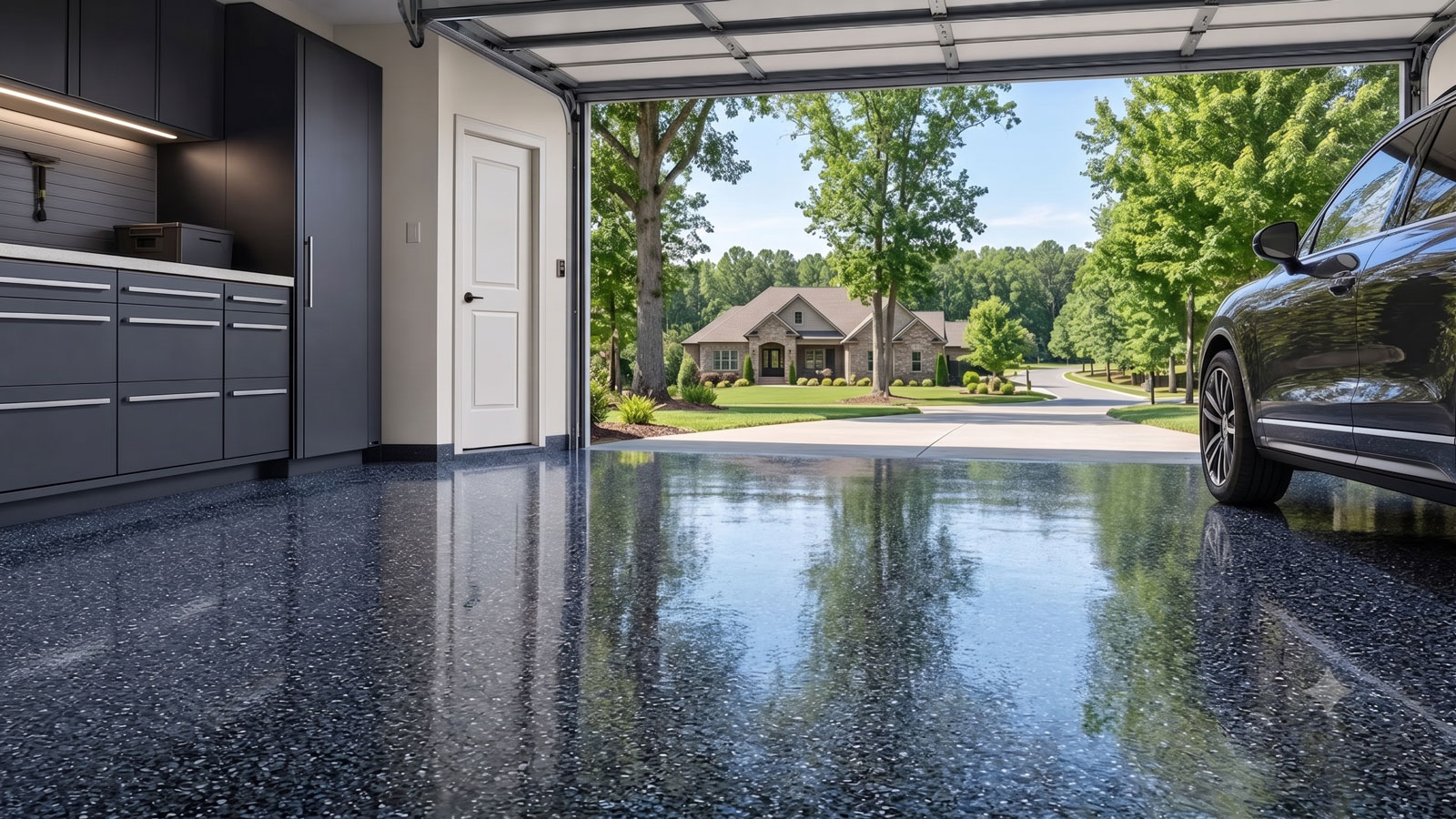
Garage Floor Coating in Schenectady, NY
Floor Coating Services in Schenectady, NY
Schenectady combines one of the Capital Region's oldest urban cores with neighborhoods shaped by railroad, General Electric, and twentieth-century suburban expansion. The Stockade, Bellevue, Woodlawn, and outer residential areas therefore contain garages and utility floors from very different construction eras.
The Mohawk River is the city's defining waterway, and local drainage also follows tributaries and a dense developed street network. River history matters, but the garage-level decision should still be based on actual threshold water, driveway runoff, persistent dampness, and evidence from previous coatings.
Older Schenectady concrete can carry paint, oil, industrial or workshop contamination, patch compounds, and later repairs, while newer residential slabs can be relatively clean but still contain curing compounds, sealers, or dense finishes that need mechanical profiling. Garage use can add another layer in Schenectady because older utility spaces may have seen tools, oil, equipment, and repeated repair work that a conventional family garage has not. Newer attached floors may avoid that contamination but add storage, steps, and control joints. The written scope should identify those use and geometry differences separately from the coating system itself.
Local Market Insight
Capital Region garages deal with winter road salt, melting snow, moisture, and repeated freeze-thaw cycles. Thorough concrete preparation and a coating system suited to those conditions are important for reliable adhesion and easier cleanup.
What Affects the Cost of Garage Floor Coating in Schenectady?
Schenectady project scope can vary with old coating removal, oil or workshop contamination, crack and patch repair, mixed pours, winter salt, urban access, and river-related drainage history.
Newer floors may shift the work toward builder treatments and control joints, while older detached garages can require much more investigative preparation even at the same size.
- Old coatings and industrial-era use: Older garages can contain paint, oil, patch materials, and workshop contamination that require removal or cleaning before a new system reaches sound concrete.
- Mohawk River drainage: River history makes water worth checking, but actual threshold entry, dampness, mineral residue, and prior coating failure should determine any moisture-related work.
- Winter contamination: Snowmelt, road salt, and gritty residue accumulate through the cold season and should be removed before installation and cleaned routinely afterward.
- Repairs and mixed pours: Later additions, utility cuts, patched cracks, and replacement concrete can create several preparation conditions under one roof. The repair plan should distinguish stable defects from joints or movement that need different treatment.
- Urban access: Detached garages, compact lots, stairs, fences, and limited staging can increase equipment and perimeter work. Include thresholds, steps, edges, and transitions instead of pricing only the open floor area.
- Finish for real use: Parking, storage, tools, and workshop activity can change traction and topcoat priorities once the slab is properly prepared. Match texture, cleaning, and cure timing to the way the garage is actually used.
Call for a clear, project-specific estimate — or request one online.
Schenectady's Older Garage Stock and Working-Floor History
Schenectady's long residential and industrial history means garage floors can carry evidence from more than one use era. A detached garage may have been expanded or repoured, and a utility floor may have seen paint, oil, repairs, or equipment long before a coating project begins.
That surface history is more important than the home's architectural style. Weak coatings, contamination, patch compounds, and transitions between pours must be exposed and evaluated so the new system bonds to sound concrete rather than to an unknown layer.
A strong estimate should distinguish removal, cleaning, repair, and profiling instead of treating every older Schenectady floor as one generic grind-and-coat project.
Schenectady's older residential and industrial fabric also makes previous repair material important. Crack fillers, feather patches, leveling compounds, and old paint can look stable until grinding exposes weak edges or incompatible layers. A useful quote should explain how questionable material will be removed and how transitions between older and newer concrete will be handled. That is especially valuable in a market where the structure and slab may have been altered multiple times over decades.
Mohawk River History and Garage-Level Water Evidence
The Mohawk River is central to Schenectady's geography and flood history, so water exposure is a legitimate local question. That does not mean every garage near the river has a slab-moisture problem.
Look for property-specific evidence such as threshold entry, low spots at the apron, damp edges, mineral deposits, or previous coating failure concentrated in the same area. Those signs are much more useful than broad neighborhood elevation alone.
Winter vehicle moisture should also be kept separate from exterior water entry. Salt and slush affect cleaning and traction; recurring runoff should be corrected as a drainage problem before coating.
Seasonal maintenance should also be separated from water intrusion. Snow, salt, and grit carried in by vehicles are expected winter exposures and mainly affect cleaning, traction, and long-term appearance. Runoff entering from outside or persistent dampness away from vehicle tracks is different evidence. The project should identify which condition exists so Mohawk River context remains useful without becoming a blanket assumption that every older Schenectady floor needs moisture treatment.
Frequently Asked Questions
Why can Schenectady garages have complicated slab histories?
Older homes, later additions, utility use, repairs, and replacement concrete can create several generations of surface treatment within the same garage. during the on-site evaluation. during the property review.
Does being near the Mohawk River automatically mean slab moisture?
No. River context prompts inspection, but threshold water, persistent dampness, mineral deposits, and prior coating failure are the useful evidence. during the on-site evaluation. during the property review.
Can oil-contaminated concrete still be coated?
Often yes, but contamination has to be evaluated and removed or treated adequately so the new system can bond to sound concrete. during the on-site evaluation. during the property review.
What does winter salt change?
It increases cleaning needs and can expose weak concrete or failed prior coatings, but it does not replace the need for proper grinding and repair. during the on-site evaluation. during the property review.
What can add labor in a detached Schenectady garage?
Tight access, old coatings, repairs, perimeter edges, steps, and multiple concrete sections can add work beyond the open slab area. during the on-site evaluation. during the property review.
Schenectady Neighborhoods & Local Context
Phone Quote Line
Speak with a local floor coating specialist about your project and get a realistic estimate range.
(518) 808-2767Typical Project Cost
$3,000 – $5,500
Typical range for a standard two-car garage. Final pricing depends on floor size, concrete condition, prep work, coating type, and finish options.
Helpful Guides
Other Service Areas