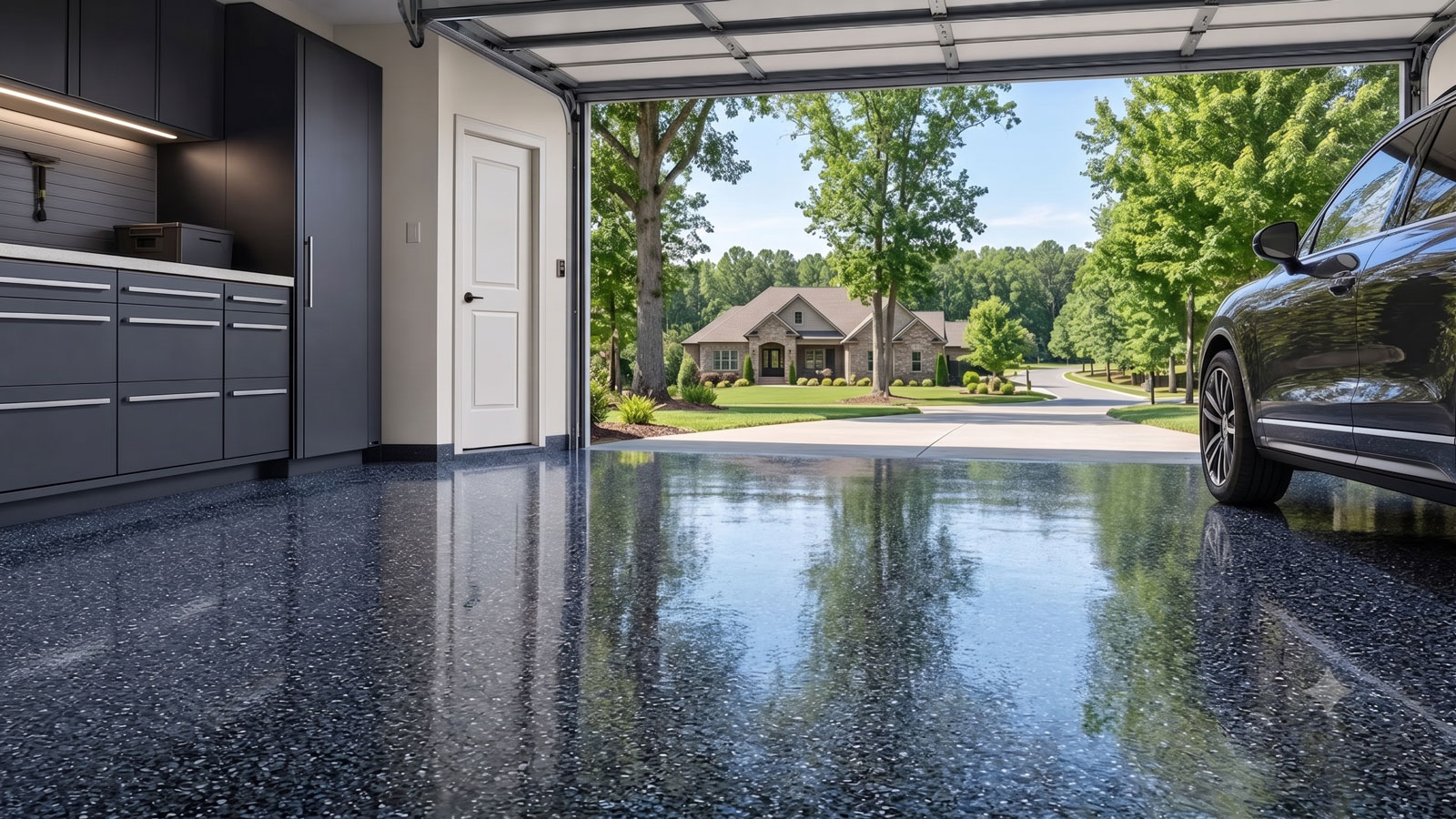
Garage Floor Coating in Troy, NY
Floor Coating Services in Troy, NY
Troy's housing stock creates a different garage-floor challenge from that found in many newer suburban communities. City studies indicate that well over half of Troy's housing was constructed before 1940, alongside later postwar neighborhoods and newer development. That means a floor-coating project may involve anything from older concrete with years of repairs and previous finishes to a much newer residential slab.
Winter adds another distinctly Capital Region issue. Nearby Albany's climate normals include roughly 59 inches of snow in an average year, with long periods of freezing weather. Vehicles can carry snow, meltwater, road grit and deicing residue directly onto a garage floor throughout the winter. New York's highway-maintenance program uses road salt, brine and calcium chloride to control snow and ice, so winter residue is a real regional maintenance consideration rather than generic cold-weather copy.
A professionally installed epoxy, polyaspartic or decorative-flake system can give the garage a more durable, cleanable finished surface, but Troy is a market where substrate evaluation matters. An installer should understand what is under the coating before recommending what goes on top of it.
Local Market Insight
Troy combines one of the Capital Region's oldest housing stocks with a genuine northern winter climate. For garage floors, that makes concrete condition, previous repairs, winter moisture and deicing residue especially relevant. A coating system should be selected around the actual slab rather than assuming that every Troy garage begins with newer, uniform concrete.
What Affects the Cost of Garage Floor Coating in Troy?
Garage size matters, but in Troy the age and history of the concrete can be just as important. Two garages with similar square footage may require very different amounts of grinding, crack repair, coating removal or surface correction before a new floor system can be installed.
That preparation should be determined from the slab itself rather than estimated solely from the age of the house.
- Concrete age and condition: Troy's unusually old housing stock means some garages and accessory structures may contain older concrete, past patches, previous coatings or multiple generations of repairs. Age by itself does not make a slab unsuitable, but it makes inspection important.
- Old paint or coatings: Existing floor paint, failing epoxy or other surface treatments may need to be mechanically removed before a new coating can bond reliably.
- Cracks and deterioration: Cracking, pitting, spalling and uneven areas may increase preparation or repair work. Damage should be evaluated rather than simply buried under a new finish.
- Winter contamination: Snowmelt, road grit and deicing chemicals are routinely carried into Capital Region garages by vehicles. The floor needs to be properly cleaned and prepared before coating so contamination does not interfere with the installation.
- Floor size and configuration: Attached garages, detached garages and older accessory structures can have very different layouts. Square footage matters, but so do edges, steps, transitions, drains and irregular spaces.
- Coating and finish: Decorative flake blends, color, texture, topcoat and system type affect price. Cure-time requirements can also matter when homeowners need to minimize the period during which vehicles must remain outside.
Call for a clear, project-specific estimate — or request one online.
Troy Winters and the Garage Floor
Troy is not a market where "winter durability" should be treated as advertising filler. The Capital Region has sustained freezing weather and substantial annual snowfall. Nearby Albany's normal January temperature is roughly 24°F, with winter months repeatedly moving above and below freezing.
That creates a simple everyday garage cycle: snow and slush arrive on the vehicle, melt inside the garage and leave water, grit and deicing residue behind. New York DOT uses salt brine before storms and also uses products such as calcium chloride in winter maintenance.
A coated floor cannot eliminate winter maintenance, but a properly installed continuous surface can make that residue easier to sweep, rinse or wipe away than porous unfinished concrete.
The more important point is preparation. Existing salts, dirt, old coatings, oil and deteriorated concrete need to be dealt with before a new system is applied. The most expensive coating material in the world cannot compensate for poor substrate preparation.
Older Troy Garages Need Evaluation, Not Assumptions
Troy's older housing is an advantage for local character, but it means homeowners should be cautious about one-size-fits-all coating recommendations. City documentation indicates that roughly 60% of Troy housing predates 1940.
That does NOT mean every garage slab is that old; garages may have been added, rebuilt or repoured decades after the house was constructed. It does mean that installers should expect variability.
Before selecting a coating, useful questions include:
- Is the concrete bare, painted or previously coated?
- Are there patches or repaired cracks?
- Is the surface sound or deteriorating?
- Are there signs of moisture?
- Has winter salt accumulated in porous concrete?
- Does the garage need to return to vehicle use quickly?
Those answers are more useful than selecting epoxy or polyaspartic from a product label alone.
Frequently Asked Questions
Can road salt damage an uncoated garage floor?
Winter deicing material and salty meltwater are worth cleaning from garage concrete rather than allowing residue to accumulate. New York road crews routinely use salt and brine during winter weather, making deicing residue a particularly relevant maintenance issue in Troy.
Does an older Troy home automatically mean the garage slab is too old to coat?
No. House age and slab age are not necessarily the same. Troy has very old housing overall, but garages may have been added or renovated later. The concrete should be evaluated based on its actual condition.
Should cracks be repaired before coating?
Cracks and deteriorated areas should be inspected and appropriately prepared before coating. Some cracks can be repaired during the preparation process; active movement or serious structural problems require a different evaluation.
Is epoxy or polyaspartic better for a Troy garage?
Neither material is automatically the right choice for every garage. Concrete condition, preparation requirements, desired appearance, installation conditions, return-to-service time and the complete coating system matter more than choosing a product solely by category.
Will coating the floor eliminate winter cleanup?
No. Snow, grit, meltwater and salt still need to be removed. The benefit is that a sound coated surface is generally easier to clean than porous unfinished concrete.
Troy Neighborhoods & Local Context
Phone Quote Line
Speak with a local floor coating specialist about your project and get a realistic estimate range.
(518) 808-2767Typical Project Cost
$3,000 – $5,500
Typical range for a standard two-car garage. Final pricing depends on floor size, concrete condition, prep work, coating type, and finish options.
Helpful Guides