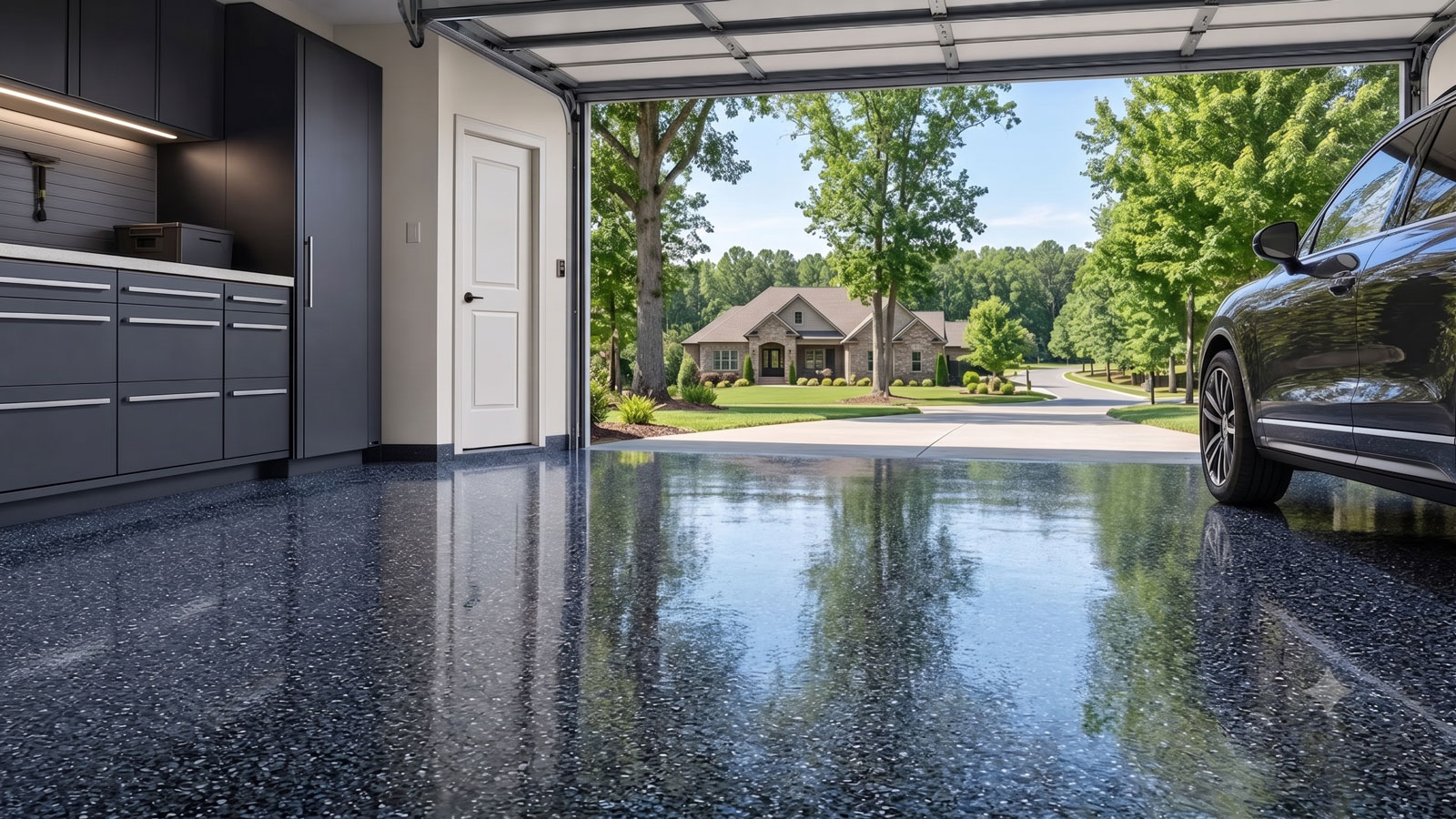
Garage Floor Coating in Colonie, NY
Floor Coating Services in Colonie, NY
Colonie spans a large suburban area between Albany and Schenectady and includes mature neighborhoods, airport-area development, Loudonville, Latham, and newer residential growth. That broad footprint creates garage floors from several suburban eras rather than one uniform slab type.
The Mohawk River forms the town's northern edge, while local creeks, wetlands, airport drainage, and extensive paved development route stormwater through very different settings. Property-level driveway grade and downspouts remain more useful to a coating project than the town name alone.
Established Colonie floors can have road-salt wear, paint, repairs, and later concrete work, while newer attached slabs can carry curing compounds, sealers, dense finishes, and builder repairs. Both profiles require mechanical preparation tailored to the slab. Colonie's wide suburban footprint also means access and garage geometry vary substantially. A compact Loudonville floor can be storage-heavy and tightly landscaped, while a larger outer-area garage may have multiple bays, long driveway staging, and more joints or stem walls. Those differences can add labor independently from the age or condition of the concrete.
Local Market Insight
Capital Region garages deal with winter road salt, melting snow, moisture, and repeated freeze-thaw cycles. Thorough concrete preparation and a coating system suited to those conditions are important for reliable adhesion and easier cleanup.
What Affects the Cost of Garage Floor Coating in Colonie?
Colonie project scope can vary with established-floor repairs, builder treatments, winter salt, airport- and highway-area access, multi-bay geometry, storage, and threshold drainage.
The town's size means a compact Loudonville garage and a larger outer residential floor can require very different staging and preparation despite similar square footage.
- Mixed suburban slab ages: Different development eras mean some floors carry decades of coatings and repairs while others mainly present newer builder-applied surface treatments.
- Mohawk River and local drainage: River context and suburban runoff make drainage worth checking, but actual threshold water and persistent dampness should determine site recommendations.
- Winter road residue: Salt, slush, and grit tracked from major roads increase seasonal cleaning and can expose weak or failed concrete surfaces. Mechanical preparation should reach sound concrete rather than simply roughen the visible surface.
- Multi-bay geometry: Larger attached garages add joints, steps, stem walls, storage edges, and perimeter beyond the open slab area. The repair plan should distinguish stable defects from joints or movement that need different treatment.
- Mature-lot staging: Landscaping, cabinets, narrow side access, and household storage can add moving and edge-preparation work. Include thresholds, steps, edges, and transitions instead of pricing only the open floor area.
- Repair versus replacement concrete: Later garage additions or repours can create transitions that need separate profiling and crack or joint decisions. Match texture, cleaning, and cure timing to the way the garage is actually used.
Call for a clear, project-specific estimate — or request one online.
Colonie's Broad Suburban Footprint and Garage Ages
Colonie stretches across a large part of the Capital Region between Albany and Schenectady, so its garage stock comes from many development waves. Mature Loudonville streets, Latham subdivisions, and newer outer neighborhoods do not begin with the same concrete history.
Older floors can accumulate coatings, salt wear, repairs, and patch materials, while younger slabs can remain difficult because of curing compounds, dense finishes, and builder sealers. Neither condition should be assumed from the appearance of the house.
The estimate should identify surface removal, repairs, profiling, joints, and edge work in property-specific terms so homeowners can compare the actual scope.
Because Colonie developed through many suburban eras, later home improvements are common project clues. A garage can contain an original slab, a replacement apron, a widened bay, patched utility cuts, or a later addition with different concrete. Those sections may respond differently to grinding and repair. A strong estimate should identify transitions and old surface treatments before work begins so the new coating system is built on consistent, sound preparation across the entire floor.
Mohawk River Context and Suburban Runoff
The Mohawk River and Colonie's extensive paved development make drainage a meaningful local consideration, but water reaches garages through the much smaller system of drives, roofs, swales, and local inlets.
During rain or thaw, watch the apron and door line. Repeated threshold water, persistent dampness, or mineral residue indicate a different problem from snow and salt simply carried in by a vehicle.
A coating can improve cleanup from normal winter use, but exterior water correction should remain separate from grinding, repairs, and finish selection.
The town's large paved footprint also makes maintenance and drainage separate conversations. Snowmelt and deicing residue from vehicles are routine winter conditions that call for cleaning and appropriate traction. Water repeatedly entering from a sloped driveway or downspout is a site issue. By separating those conditions, a Colonie project can address actual runoff where needed without treating normal winter wetness as evidence of a slab problem.
Colonie's size also makes access and garage geometry highly variable, from compact mature lots to large multi-bay suburban floors with more joints, storage edges, and staging needs.
Frequently Asked Questions
Why can Colonie garage floors vary so much?
The town spans many suburban development eras, so older repaired slabs and newer builder-treated floors can exist only a few miles apart. during the on-site evaluation. during the property review.
Does Mohawk River proximity automatically mean moisture treatment?
No. Actual threshold water, persistent dampness, mineral deposits, and prior coating failure are more useful than river proximity alone. during the on-site evaluation. during the property review.
How does winter salt affect preparation?
Salt and grit need thorough cleaning and weak surface material still has to be removed mechanically before coating. during the on-site evaluation. during the property review.
What adds labor in a multi-bay Colonie garage?
Joints, steps, stem walls, storage edges, cabinets, and extra perimeter can add detailed preparation beyond open floor area. during the on-site evaluation. during the property review.
Can a later garage addition need different prep?
Yes. Different pours can have different texture, repairs, sealers, and joints, so each section should be evaluated before coating. during the on-site evaluation. during the property review.
Colonie Neighborhoods & Local Context
Phone Quote Line
Speak with a local floor coating specialist about your project and get a realistic estimate range.
(518) 808-2767Typical Project Cost
$3,000 – $5,500
Typical range for a standard two-car garage. Final pricing depends on floor size, concrete condition, prep work, coating type, and finish options.
Helpful Guides