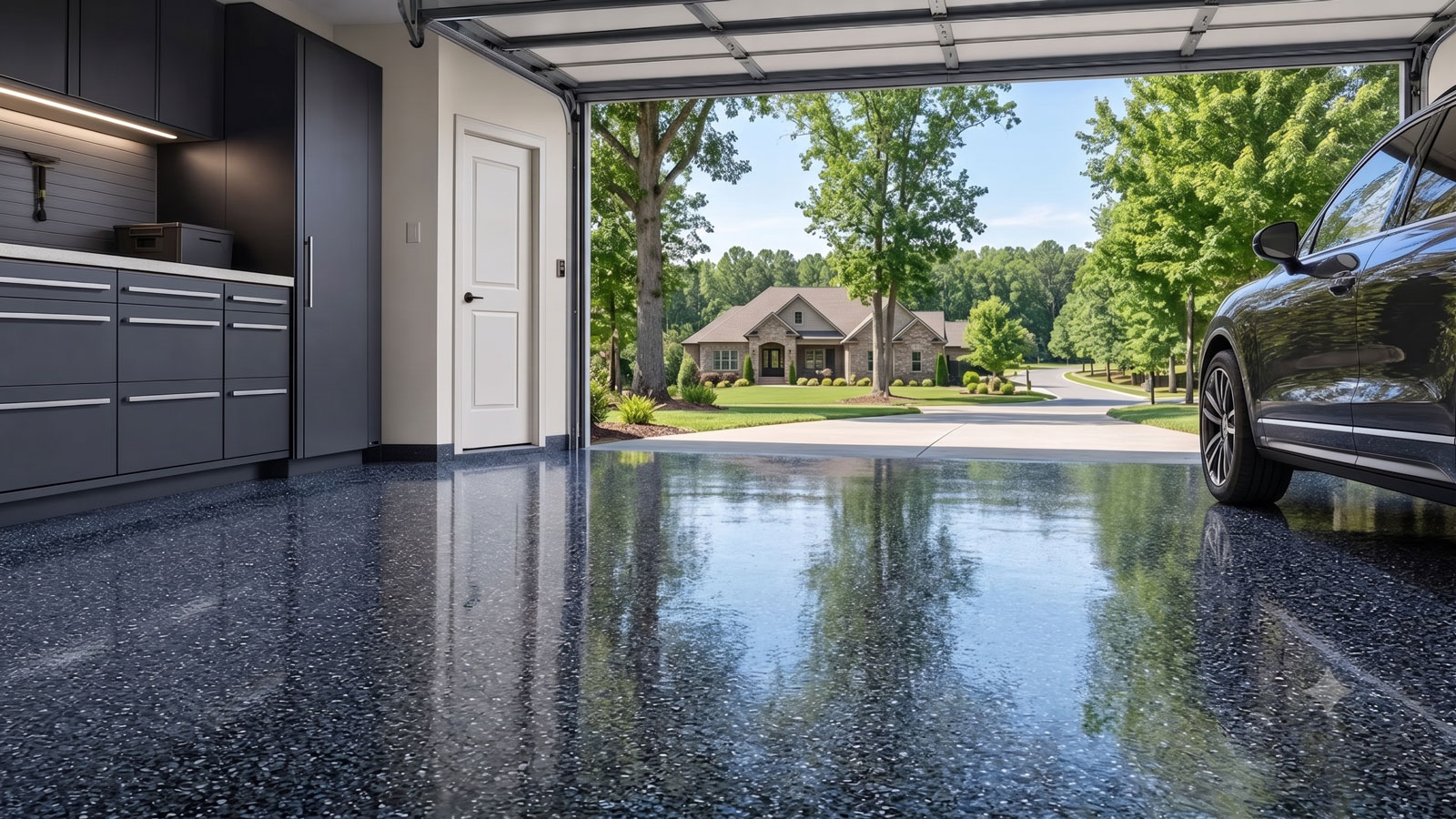
Garage Floor Coating in Saratoga Springs, NY
Floor Coating Services in Saratoga Springs, NY
Saratoga Springs combines a historic nineteenth-century core, large older homes, postwar neighborhoods, and continuing residential growth around the city. Garages near downtown and established streets can have very different slab histories from larger newer attached floors on the outer edges.
Geyser Creek, Saratoga Lake, local springs, wetlands, and rolling terrain make water part of the city's identity, but those features should lead to a property-level drainage inspection rather than an automatic moisture assumption. Driveway grade and threshold behavior still matter most at the garage.
Older floors may have paint, repairs, salt wear, or later additions, while newer slabs can carry curing products, sealers, dense finishes, and builder patches. Winter vehicles add snowmelt and deicing residue regardless of slab age. Saratoga Springs garages can also differ in access and finish expectations. A compact older property may require tighter staging and more perimeter work, while a newer multi-bay garage can add joints, steps, storage edges, and larger decorative surfaces. Those practical details should be listed alongside surface preparation so the homeowner can compare real project scope rather than coating brand alone.
Local Market Insight
Saratoga Springs garages are year-round transition spaces. Winter salt, meltwater, spring moisture, summer household use, and the condition of the existing concrete all deserve attention before a coating system is selected.
What Affects the Cost of Garage Floor Coating in Saratoga Springs?
Saratoga Springs project scope can vary with historic or remodeled slab history, old coatings, builder treatments, larger garage layouts, drainage, winter salt, and high-finish expectations.
Detached or altered garages near the older core may require more access and repair work, while newer multi-bay floors often shift the work toward joints, builder products, and storage staging.
- Historic and remodeled slab history: Older homes can have later-added or repoured garages with paint, patches, and concrete transitions that need separate preparation. The quote should identify the specific removal or repair included before coating.
- Geyser Creek and local drainage: Creek and lake context make runoff worth checking, but threshold entry, persistent dampness, and prior coating failure should determine water-related scope.
- Builder treatments on newer slabs: Curing compounds, sealers, dense finishes, and construction repairs can interfere with adhesion despite a clean appearance. Mechanical preparation should reach sound concrete rather than simply roughen the visible surface.
- Winter salt and snowmelt: Tracked-in deicing residue and slush affect cleaning, traction, and surface condition throughout the cold season. The repair plan should distinguish stable defects from joints or movement that need different treatment.
- Larger multi-bay layouts: Steps, stem walls, control joints, storage areas, and extra perimeter add detailed labor beyond open floor area. Include thresholds, steps, edges, and transitions instead of pricing only the open floor area.
- Decorative and household priorities: Busy family use, storage, and finished-garage expectations can influence texture, cure timing, and topcoat choice after proper preparation. Match texture, cleaning, and cure timing to the way the garage is actually used.
Call for a clear, project-specific estimate — or request one online.
Historic Saratoga Garages and Modern Suburban Slabs
Saratoga Springs' historic core and long residential history create garages that may be much younger than the houses they serve. Additions, replacements, and remodels can introduce later pours, repair materials, and old coatings within mature properties.
Newer outer neighborhoods present a different challenge. Their concrete may have fewer legacy coatings but still contain curing products, sealers, builder patches, and dense finishes that require substantial profiling.
A useful estimate should identify which preparation profile is actually present instead of assuming historic means difficult or newer means simple.
Historic properties may also have garage floors that do not match the age or prestige of the house around them. A later addition, replacement slab, or repeated repair campaign can leave several concrete textures and joint types under one roof. Those transitions need to be identified before grinding so stable cracks, movement joints, weak patching, and old coating layers receive the right treatment. A polished final appearance depends on that unseen preparation work being handled consistently.
Geyser Creek, Saratoga Lake, and Winter Water
Geyser Creek, Saratoga Lake, springs, and local wetlands make water a genuine part of Saratoga Springs' geography. The relevant garage question, however, is what water actually does at the property.
Driveway ponding, threshold entry, damp edges, and previous coating failure are stronger evidence than simple proximity to a creek or lake. A higher property can still have poor grading, while a lower property can remain dry.
Snowmelt and road salt from vehicles are normal seasonal exposures. They should influence cleanability and traction but remain separate from exterior drainage or slab-moisture concerns.
Saratoga's winter climate adds normal wet use that should be distinguished from drainage trouble. Snowmelt, road salt, and slush can make a floor wet for hours after vehicles return, especially near the door. That does not automatically indicate moisture through the slab. Persistent dampness, mineral deposits, or runoff entering during rain or thaw are different clues. Keeping those conditions separate helps avoid unnecessary moisture assumptions while still addressing legitimate site-water problems.
Saratoga Springs homeowners should also expect access and staging to differ between older compact properties and larger outer-area garages, so perimeter detail and household logistics belong in the estimate.
Frequently Asked Questions
Can a historic Saratoga Springs home have a newer garage slab?
Yes. Garages are often added, rebuilt, or repoured later. Joint lines, texture changes, and repairs can reveal a different concrete age. during the on-site evaluation. during the property review.
Does Geyser Creek or Saratoga Lake proximity mean moisture treatment is required?
No. Water features are context. Actual threshold water, dampness, mineral deposits, and prior coating failure should drive the recommendation. during the on-site evaluation. during the property review.
Do newer Saratoga garages still need grinding?
Yes. Curing compounds, sealers, dense finishes, and builder repairs can interfere with adhesion even on young concrete. during the on-site evaluation. during the property review.
How does winter use affect the finish?
Snowmelt and salt make cleanability and sensible traction important, while routine cleaning remains necessary throughout winter. during the on-site evaluation. during the property review.
What can add labor in a larger attached garage?
Extra joints, steps, stem walls, storage edges, and perimeter grinding can add substantial detail work beyond the open slab area. during the on-site evaluation. during the property review.
Saratoga Springs Neighborhoods & Local Context
Phone Quote Line
Speak with a local floor coating specialist about your project and get a realistic estimate range.
(518) 808-2767Typical Project Cost
$3,000 – $5,500
Typical range for a standard two-car garage. Final pricing depends on floor size, concrete condition, prep work, coating type, and finish options.
Helpful Guides
Other Service Areas